


Residential rental property is generally depreciated over 27.5 years using straight-line depreciation, and only the building is depreciable because land is not. That makes the split between land and building one of the most important inputs, because it establishes the original amount available for depreciation. The placed-in-service date, later improvements, passive-loss limits, and eventual sale also affect what the deduction is worth. Depreciation is a deferral rather than a gift, and its value depends on when you can use it and what ultimately happens to the property.
Most owners have heard the headline: you deduct part of the building’s value each year, the deduction lowers taxable income, and claiming it does not require a cash payment.
Those points are true, but the benefit is not necessarily permanent.
What almost nobody looks at is the number that establishes the original depreciation deduction. It is generally set at purchase, often in only a few minutes, and it can affect the property’s taxable income for decades.
The mechanics, briefly
The idea is that a building wears out. The tax code lets you deduct that wearing out over a fixed period whether or not the building is actually deteriorating and whether or not it is going up in value.
For residential rental property the period is 27.5 years, and the method is straight line, which means the same amount every year. Commercial property runs on a longer schedule. IRS Publication 527 is the source for residential rental property.
Two details matter more than they sound.
The clock starts when the property is placed in service, not when you bought it. Placed in service means ready and available to rent. A house bought in March and rented in June starts in June. A house bought in March, renovated, and listed in September starts in September.
The first year is partial. Residential rental property uses a mid month convention, which treats the property as placed in service in the middle of whatever month it actually was. So the first year and the final year are both fractions rather than full years, which is why a twelve year hold does not produce exactly twelve years of deductions.
The number that decides everything
Land does not wear out, so land is not depreciable. Only the building is.
Which means your annual deduction is entirely determined by how the purchase price gets split between the two. And that split is not given to you. You establish it.
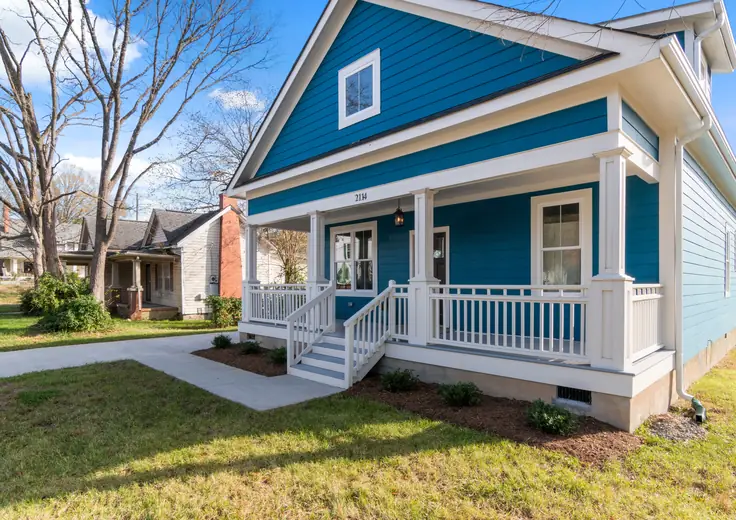
This example continues with the recurring house used throughout the site, purchased for $187,500. Four different land allocations produce four different full-year deductions. To keep the comparison consistent, the table multiplies each annual amount by twelve and does not apply the partial first and final years created by the mid-month convention.
Same house, same price, same everything else. The difference between the first row and the last is $12,272 across twelve full-year deductions, and the only thing that changed was the land allocation entered at purchase.
The key is that allocation has to be reasonable and supportable. The most common defensible method is to take the land and improvement values from your county assessor, work out the land share as a proportion of the total, and apply that ratio to what you actually paid. An appraisal that separates the two works as well. So does an allocation written into the purchase contract, where one exists.
What is not defensible is picking a round number because you heard it somewhere, which is what most people do. It is also the input a CPA will ask about first if the return is ever examined, so it is worth having the assessor page saved rather than reconstructing the reasoning years later.
More than one schedule is usually running
The building is not the only depreciable thing, and treating it as though it were leaves deductions on the table.
Appliances, carpet, and similar personal property run on shorter recovery periods than the building. Land improvements such as fencing, driveways, and landscaping run on their own period, also shorter than 27.5 years. And a capital improvement made later, like the $12,000 roof in the reserves example, starts its own schedule from the date it was placed in service rather than joining the original one.
So a property held for years typically has several schedules running at once, at different rates, finishing at different times. This is the main reason the depreciation figure on a return rarely matches the simple building divided by 27.5 arithmetic.
Whether it is worth separating these out in detail on a single family rental is a real question with a cost attached. On larger properties the formal version of that exercise is a specialist job. On a $187,500 house it usually is not, but the appliances and the roof are worth getting right.
You cannot decline it
This is the part people get wrong, and it is worth pointing out clearly.
Your basis is reduced by depreciation allowed or allowable. If you were entitled to take it and did not, the basis falls anyway. Most landlords are not aware of this.
Skipping depreciation does not preserve anything. You give up the deduction and you keep the reduction, which is the worst possible available outcome. What that costs, who it happens to, and how it gets corrected is covered in depreciation recapture.
It is a deferral, not a gift
Depreciation can reduce taxable income while you own the property. If you later sell at a gain, the portion of the gain tied to depreciation may be treated as unrecaptured Section 1250 gain and taxed at a rate of up to 25 percent.
That does not mean every dollar deducted today will be repaid later at exactly 25 percent. The amount cannot exceed the gain on the sale, and the actual tax depends on your taxable income, other gains and losses, and how the property leaves the portfolio.
The better way to think about depreciation is as a timing benefit. You may receive the deduction years before the related gain is recognized, leaving that money with you in the meantime. Sometimes the deduction reduces income at a higher rate than the later gain is taxed, and sometimes the difference is much smaller. Either way, the deduction has value, but it is not free money.
A qualifying 1031 exchange can defer recognition along with the rest of the gain, which is covered in what happens when you do not reinvest everything. The treatment can also change when a property passes to heirs, which is covered in inheriting a rental property.
The deduction may not even be usable this year
One more limitation, and it surprises owners who expected the deduction to show up on their return as a reduction in tax.
Rental activity is generally passive, which means a loss may be carried forward rather than deducted in the year it arises. Depending on your circumstances, that suspended loss may become usable against other passive income, through a special allowance, or when you dispose of your entire interest in the activity through a fully taxable transaction.
The awkward part is that the depreciation still reduces your basis even when the deduction contributes to a loss you cannot currently use. The tax benefit may arrive later, but the basis reduction does not wait.
Your own position here depends on your income, your participation in the activity, and how the property is held. It is worth asking rather than assuming, because it changes what the property is actually doing for you.
What it does to the number in your pocket
Set the tax code aside for a moment and keep two calculations separate.
The recurring house produces about $3,840 a year of cash flow after paying its expenses, making the full mortgage payment, and placing money into reserves. Taxable profit is calculated differently. It deducts mortgage interest rather than the full mortgage payment, does not deduct money merely because it was moved into a reserve account, and subtracts depreciation even though no cash leaves the owner’s account for that deduction.
In year two, mortgage interest is about $6,589 and depreciation is $5,455. Those deductions leave approximately $3,470 of taxable profit, which is $370 less than the $3,840 of cash the property produced.
By year twelve, mortgage interest has fallen to about $5,154 because more of the payment is going toward principal. The property then reports approximately $4,905 of taxable profit, which is $1,065 more than its cash flow. The difference is traceable: $3,966 of principal and $2,554 placed into reserves are not deductible, for a total of $6,520, while depreciation remains $5,455.
Both years are worked through in what a rental property actually earns each month.
Depreciation therefore does not automatically make rental cash flow tax-free. Earlier in the loan, higher interest and depreciation may shelter part of the cash. Later, the same property can report more taxable profit than the cash it produced because interest has fallen while principal paydown and reserve contributions remain nondeductible. If the property is eventually sold at a gain, part of the gain tied to depreciation may be taxed as unrecaptured Section 1250 gain at a rate of up to 25 percent.
Where it fits in a decision
Depreciation is an input to a decision rather than a reason for one.
It changes what a property nets after tax, which changes whether holding beats selling. It changes the size of the tax bill on an exit, which changes what a sale actually produces. It does not change whether the property is worth owning, whether the equity is doing anything, or whether any of it moves you toward what the portfolio is for.
The owners who get into trouble with it are usually the ones who bought a weak property because the tax treatment was good. A deduction on a property that loses money is really just a discount on a mistake. The comparison that matters is what selling, holding, refinancing, or exchanging each do to the whole portfolio, with the tax included in the decision rather than allowed to make the decision.
Before you rely on any of this
The figures above are illustrative. Recovery periods, conventions, and the treatment of specific components are set by the tax code and the details are more particular than a general article can carry.
Your land allocation, your placed in service date, your component schedules, your passive loss position, and your own marginal rate all change the outcome. Set the schedule up with a CPA at purchase rather than reconstructing it later, and check any correction procedure with them rather than attempting it.
Novarif is being built to show rental property owners what each property produces after tax, including depreciation and what it costs on exit, and what that means across the whole portfolio. Join early access to see the after tax version of your own numbers.