


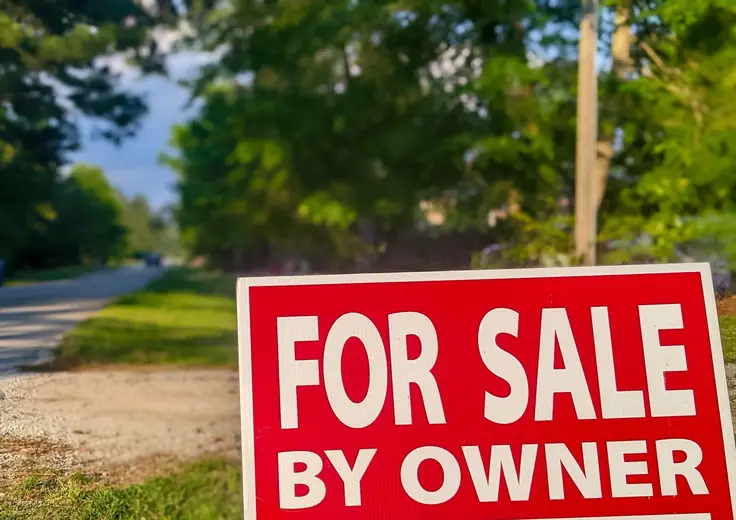
Every rental investor eventually has a property they are tired of owning.
Maybe it barely cash flows. Maybe every turnover is a headache. Maybe the equity has grown, but the return on that equity is weak. Maybe the property is not truly bad, but you just do not like owning it anymore.
Many investors would say the annoyance is not a financial reason to sell.
There is some truth in that. But it is not the whole truth. Owning a property you loathe can wear you down, and that matters. The question is not whether that feeling is valid. The question is whether selling is actually the best move once you count the tax bill, the lost income, the replacement options, and the effect on the whole portfolio.
Selling is not really one decision, but rather, it is a comparison between several paths. And the path that feels obvious in the driveway is often not the one that wins when you consider everything.
The reasons owners start thinking about selling
Most owners do not decide to sell out of nowhere. It is often a slow build up or a revelation that things are not optimized.
The equity has grown, but it is just sitting there. A property worth a lot more than you paid can still produce a weak return on the equity trapped inside it. Large amounts of money sitting idle in a home is not working very hard.
The cash flow is thin, flat, or negative. Rent has not kept up. Expenses have grown over time. What used to feel like one of your steady earners now feels like a drain on your portfolio.
The repairs never stop. Some properties are money pits. The roof, the plumbing, the turnover, the surprise every quarter. At some point, many owners feel like the property owns them.
The property no longer fits the plan. It may be in the wrong place, the wrong price range, or the wrong type for where you are trying to take the portfolio.
And the personal part, which is real even though people rarely say it out loud, is that sometimes you just do not want to own that property anymore. Peace of mind cannot be calculated on a spreadsheet, but a decision to sell still has an impact and that has to be measured.
All of those are fair reasons to start asking the question. None of them, by themselves will answer it.
Selling may feel simple, but the math usually is not
The biggest mistake owners make with a sale is thinking the sale price is what they keep.
It is not.
Transaction costs come out first, such as, commissions, closing costs, and whatever the property needs to be sell-ready.
Then the taxes. If the property has gained value, there is capital gains tax on the profit. Here is the link to the IRS rules on capital gains tax. And there is the one most owners forget: depreciation recapture. For all the years you owned the property, depreciation lowered your taxable income and likely improved your after-tax cash flow. When you sell, part of that benefit can come back through what is called recapture. Owners who never thought about it are often surprised by how much it changes the money they walk away with.
The exact numbers depend on your basis, how long you owned the property, your income, and your state. That is not something to guess at, so before you count on a sale price, the recapture and gains math is worth confirming with a CPA. If you are considering a 1031 exchange, a qualified intermediary also needs to be involved early. The real number is often smaller than your expectations.
The point is not that selling is bad. The point is that the amount you actually keep after a sale is the number that belongs in the comparison, not the sales price.
A 1031 exchange may change the comparison
One way to deal with the tax bill is to not trigger it yet.
A properly structured 1031 exchange may allow you to defer eligible gain by reinvesting the proceeds in qualifying replacement property. Done right, it keeps more of your capital working instead of handing a chunk to the tax bill.
But a 1031 is not free money. It comes with rules, tight deadlines, and the pressure of finding a replacement property that actually fits. A rushed exchange can push you into a worse property just to beat a clock. It is a different path with different tradeoffs, not a magic way to avoid tax consequences.
For some owners it is the right decision. For others it trades a tax problem for a timing problem and forces them into a bad property. A full 1031 exchange or a partial 1031 exchange belongs in the comparison, but each should be carefully considered, every time.
Sometimes the answer is not sell. It is fix the property.
If the reason you want out is weak cash flow, it is worth asking whether the property is underperforming or just under-rented.
A property with thin cash flow may be under-improved, behind on rent, or sitting in an area that now supports more than it did when you bought it. If the market supports higher rent, a focused rehab and a rent increase may solve the actual problem without triggering a sale, a tax bill, or the hunt for a replacement. If the rehab is large enough that you would refinance afterward to get your money back out, that is a BRRRR, and it comes with its own way of failing.
Not every money pit can be fixed, and not every area supports higher rent. But it is worth checking before you assume the only way out of a cash-flow problem is the door.
Sometimes the answer is not sell. It is cash out.
If the real issue is trapped equity, selling is not the only way to free it.
A cash-out refinance can pull equity out of the property and put it back to work, while you keep the asset, keep the future upside, and avoid triggering sale taxes at the point of sale. For an owner whose main complaint is "my money is just sitting there," this is the path most people forget to put on the table.
It is not automatically the right move. The new debt has to make sense. More cash in hand does not help if the larger payment weakens the property or the portfolio. Pulling equity out only works if the debt coverage still works after the new loan. But it is a real option, and it directly answers the most common reason owners consider selling in the first place. It deserves to be compared.
The property-level answer may be different from the portfolio-level answer
Here is where most of this gets decided, and it is the part a single property cannot show you. It starts with knowing where your portfolio actually stands.
Selling might improve your sanity but reduce your future income. Holding might preserve appreciation but keep too much equity trapped. A cash-out might fund the next purchase but add leverage you did not want. A 1031 might preserve capital but force a rushed replacement. A rehab might fix the cash flow but tie up money you needed elsewhere.
Every one of those looks different in isolation than it does against the whole portfolio and the goal.
The property you loathe might be the one holding your income together. The money pit might still be worth keeping once you price in the tax hit of selling. The strong-looking sale might set your plan back further than the annoyance is worth.
You cannot see any of that from one property. You can only see it when you look at the move and the rest of the portfolio together.
The real question
The question was never really "Should I sell?"
The better question is this: compared with holding, refinancing, improving, or exchanging, what does selling actually do to the whole portfolio and the goal you are building toward?
Selling might be the answer. So might a cash-out, a 1031, a rehab, or simply holding for now because the tax bill and the replacement options do not justify the move.
The point is not to pick the path that feels best in the moment. It is to compare the paths honestly, with the real numbers, against what the portfolio is for.
Novarif is being built to help rental property owners compare those paths side by side: hold, sell, cash out, use a 1031 exchange, rehab, or reinvest, and see what each move does to income, equity, coverage, taxes, and goals across the whole portfolio. Join early access to see what each decision could do to your whole rental portfolio.