


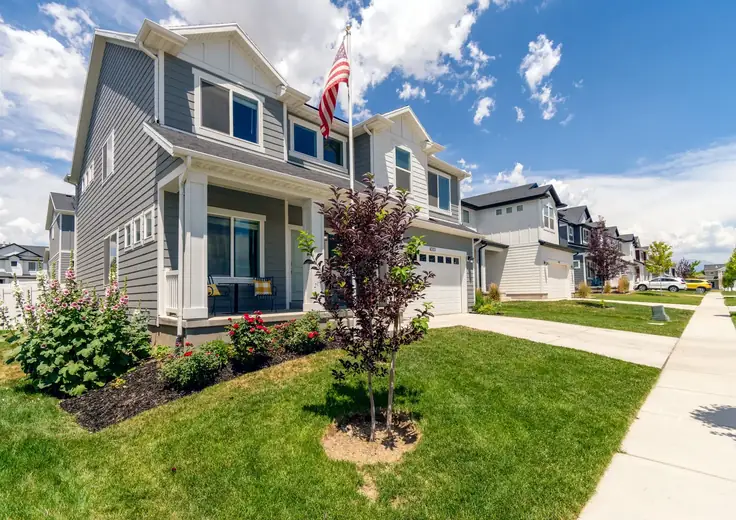
Most rental property owners know what is happening with each house, but they do not really know where the full portfolio stands. They know the rent on one house, the mortgage on another, and maybe the rough value of a few properties. What they often cannot tell you is the total portfolio value, total equity, real annual cash flow after expenses, debt position, or whether the portfolio is on track for their long-term goal. A rental portfolio is not just a group of houses. It is a business, and a business needs a clear current picture.
Most owners can talk about their rentals one property at a time. The house on Oak Street rents for $1,650. The duplex had a rough turnover last year. One loan is almost paid down and another one still has a long way to go. They can usually find the insurance, tax bill, and mortgage statement if they need them.
Ask about the portfolio, though, and things become less clear. What does the whole thing earn after every real cost? How much equity do you actually have, and which properties are helping or hurting the plan? Are you on track for retirement, or are you hoping the properties add up to enough someday?
That is where a lot of rental owners get stuck. And honestly, it is not because they are bad investors. It is because the tools most small landlords use were never built to show the whole picture.
A rental portfolio becomes a business before most owners realize it
A lot of people never set out to build a rental portfolio. They buy one house and then another. Maybe they keep a former primary residence, inherit a property, or buy when a good deal comes across their desk. Over time, one property turns into three, three turns into seven, and what felt like a side investment is now a real business.
The hard part is recognizing that you actually own a rental business.
There is no official moment when the owner says, "This is no longer just a few rentals. This is now a portfolio."
So the properties keep getting managed one at a time. One lease. One roof. One loan. One tenant issue. One tax bill. That works for a while. But eventually, the real question is not what each property is doing by itself. The real question is what all of them are doing together.
That is the part most owners cannot see clearly.
The numbers most owners should know
If you own more than one rental, there are a few numbers you should be able to see without rebuilding a spreadsheet every time. Start with what the portfolio is reasonably worth today, not what you paid for it five or ten years ago. Then look at how much equity is left after the debt.
You should know what the portfolio earns after taxes, insurance, repairs, vacancy, management assumptions, and debt payments. You should also know what you are setting aside for future capital needs. Not just gross rent and not just "cash flow" before the expenses you did not expect show up.
You also need to know whether one property is carrying the portfolio while another one is dragging it down, how much room you have to refinance, buy another property, sell one, or do nothing, and whether the portfolio is moving you toward your goals.
Most owners have some of this information. Very few have it in one place, current, organized, and easy to understand. That is the piece that is missing most often. The information exists, but it is scattered across bank accounts, loan statements, tax records, insurance bills, Zillow guesses, memory, and spreadsheets that may or may not still be right. Pulling those numbers into one current place, after the real costs, is the specific gap Novarif is built to close.
Scattered information rarely produces a clear picture.
The spreadsheet usually starts clean and then slowly stops telling the truth
Almost every investor goes through the spreadsheet phase. At first, it works well. You build the tabs, enter the rents, add the loans, and set up a few formulas.
Then life happens. Taxes change. Insurance goes up. A property gets refinanced. A tenant moves out. A repair hits. You buy another property. You forget to update one tab. A formula gets copied wrong. A value gets stale. A loan balance is off by six months.
The spreadsheet does not usually break all at once. It slowly becomes less true while still looking official because it has numbers, formulas, and formatting.
If the inputs are old or the logic is incomplete, the confidence it gives you is false.
And this is where bad decisions start. Not because the owner is careless, but because the owner is making decisions from a picture that is no longer accurate. The alternative is not a fancier spreadsheet. It is a system where every number traces to a formula.
The estate problem nobody wants to think about
There is another reason this matters, and it may be the most important one. If something happened to you tomorrow, could anyone else understand your rental portfolio?
Would your spouse know which property is strongest? Would your kids know which loan matters most? Would your business partner know which property you planned to sell, refinance, or keep forever? Would they know what the portfolio earns, what it is worth, and what risks are hiding inside it? Likely not unless you have already planned for it.
A lot of rental portfolios live mostly inside one person's head. That person knows the story and the future plan. They know which property has hidden equity, which one needs a roof, and which one should probably be sold.
But if that knowledge is not captured in a way someone else can actually use, then the portfolio becomes fragile. The owner may think they are leaving behind an asset. And they certainly are. But they may also be leaving behind confusion.
That is not just a financial problem. That is a family problem.
Rental property should not become a second crisis on top of the loss of a loved one.
A clear portfolio picture is not only for the owner making decisions today. It is also for the people who may someday have to step in and understand what was built.
Knowing where you stand comes before every major decision
Most rental investors eventually face the same choices: sell or hold, refinance, pull equity out and buy another property, pay down debt, or stop buying for a while. There may also be a choice between taking the tax hit and looking at a 1031 exchange.
Those questions cannot be answered correctly in isolation. A property may look fine by itself but weaken the portfolio. Another property may look average on cash flow but be important because of equity, debt position, or long-term appreciation. A refinance may help one property and hurt the portfolio's risk position, which is the most common way a BRRRR fails. Selling may look attractive until you see what it does to future income.
The point is simple: property-level decisions have portfolio-level consequences. You cannot see those consequences if you do not know where the portfolio stands first.
That is why the first step is not deciding whether to sell, hold, refinance, or buy more. The first step is getting a clear current picture.
The individual investor deserves the same kind of visibility institutions have
Large investors do not manage real estate from memory. Funds, institutions, and family offices look at the whole picture. They track value, income, debt, risk, returns, and goals across the portfolio. They can model decisions before they make them.
The small landlord usually cannot, even though the decisions are still big. Someone with five rental houses may have a million dollars or more tied up in real estate. With ten or fifteen doors, a major part of that person's net worth may be inside the portfolio.
That owner should not have to guess as to where they stand at any point in time.
They should be able to see the whole thing clearly: what it is worth, what it earns, how much debt it carries, what risks exist, and whether it is moving toward the goal.
That is the reason Novarif exists. It does not replace judgment, tell an investor what to do, or pretend any model can predict the future perfectly.
Novarif exists to give rental property owners a clearer starting point: one current picture of the portfolio, after the real costs, against the owner's own goals.
Because once you know where you stand, the next decision gets a lot easier to evaluate.
The first question is simple
Before asking whether to buy the next property, sell the underperformer, refinance, or pull out equity, ask the basic question first.
Do you actually know where your rental portfolio stands?
If the answer is no, that is not a failure. It is just the starting point. But it is a starting point that matters, because you cannot build toward a goal if you cannot see where you are now.
Novarif is being built to help rental property owners see their portfolio as one picture, model major decisions, and understand whether those decisions move them toward their goals. Join the early-access list to be notified when Novarif opens.